
September 28th, 2009
OSCE Will Remain Engaged On Slovakia’s Language Act

Slovakia’s Hungarian Coalition Party (SMK) keeps pushing the country’s new State Language Act into the centre of national as well as international attention. Only one day after a massive protest was organised in Dunajská Streda in opposition to the law, party representatives travelled to The Hague and, after their return, claimed that they want to help prepare the guidelines to the legislation. READ MORE
September 25th
OSCE High Commissioner Discusses Minority Participation, Education During Visit To Kazakhstan

The OSCE High Commissioner on National Minorities, Knut Vollebaek, urged Kazakhstan to further enhance effective minority participation in the country. READ MORE
Germany - Central Asia: Words Must Be Backed Up By Action

Germany and the EU are ready to help the Central Asian countries improve the region’s water management. Minister of State Gernot Erler underlined this during the second EU-Central Asia conference at ministerial level in Brussels. In 2008 Germany, already recognizing
the problem, started the Central Asia Water Initiative. READ MORE
Andrey Fedorov: “Lukashenko Knows Russia’s Pressure Points Very Well”

Executive director of National informational centre of Russia Andrey Fedorov told his opinion about development of Belarusian-Russian interrelations. READ MORE
September 23rd
Four-Way Street In Kazakhstan

The presidents of Azerbaijan, Kazakhstan, Russia, and Turkmenistan ended their meeting in Kazakhstan's resort city of Kenderly with its purpose and consequences as clear as distant figures in an early autumn mist. READ MORE
Placating Russia Won't Work
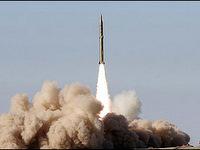
Russian leaders never liked the idea that the United States, Poland and the Czech Republic were cooperating on missile defense to confront an emerging Iranian threat. The notion that two former Warsaw Pact states that Moscow used to control would be hosting 10 interceptor missiles in Poland and a corresponding radar facility in the Czech Republic was unacceptable. Kremlin leaders alleged that the system was meant to target Russia, not counter Iran, and they had threatened to scuttle unrelated arms control negotiations with the United States unless Washington backed down. READ MORE
Putin's 'Polish Syndrome'

Ten years of absolute power and 10 years of unlimited sycophancy have not failed to leave their mark on Russian Prime Minister Vladimir Putin. He has completely lost the ability to listen to others or to hear himself. READ MORE
September 21st
US Targets Russian Support On Iran With Shield Reverse, Say Experts

Scrapping the US missile shield project has more to do with Iran than just its perceived lack of current threat, say experts. Removing the barrier to dialogue with Russia could give the US a powerful ally against Tehran. READ MORE
War Between Russia And Ukraine – A Possibility

What exactly is going on in Russian – Ukrainian politics? Nobody can give a precise answer nor can they explain what really provoked the strongly-worded statement of Russian president Dmitry Medvedev on August 11th, in which he denounced the Ukrainian president for his anti-Russian policy and announced that the new Russian envoy to Ukraine would remain in Moscow for the time being. READ MORE
September 18th
The Great Pipeline Opera

Inside the European pipeline fantasy that became a real-life gas war with Russia.
When Joschka Fischer's lucrative new job as the "political communications advisor" to a consortium of European energy companies was leaked to a German business publication this summer, there was one comment that stood out. "Welcome to the club," said Gerhard Schröder, an even more highly paid advocate for the other side in Europe's increasingly politicized energy war.
Schröder's remark was short, snide -- and very much to the point. For eight years, the two men had led Germany together, with Schröder ruling as its center-left chancellor and Fischer as his foreign minister. Their long-running partnership had survived a particularly complicated era in post-Cold War Europe, and publicly Fischer had always been supportive, even telling Der Spiegel that Schröder "will go down in the history books as a great chancellor." READ MORE

